
Understanding the concept of materiality represents one of the main challenges in sustainability reporting. More than a technical requirement, materiality is a strategic tool that guides organizations in identifying the most relevant ESG issues, both for the business and its stakeholders.
When properly applied, materiality allows for the alignment of corporate strategy with societal expectations, while improving the quality, transparency, and usefulness of the information disclosed.
The concept of Dual Materiality
Dual materiality combines two complementary perspectives:
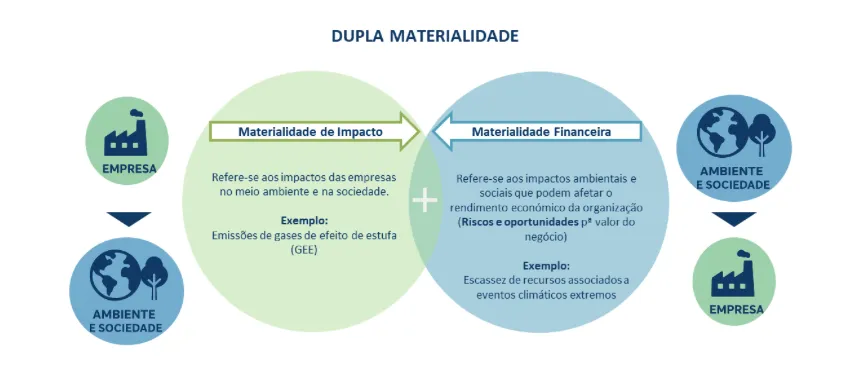
Financial materiality: ESG risks and opportunities with the potential to influence the organization’s economic performance in the short, medium, or long term.
Impact materiality: positive and negative impacts of the company’s activities on the environment and society.
Adopting this logic allows companies to obtain an integrated view of their impacts, risks, and opportunities, favoring: More informed management; More credible communication; A more effective response to sustainability challenges.
Dual materiality is not only a growing regulatory demand, but also a reflection of the maturity of organizations in a changing world, where financial performance is increasingly intertwined with ESG performance.
By incorporating this approach, companies are able to anticipate risks, identify strategic opportunities, and communicate ESG information transparently and reliably, strengthening trust with investors, customers, and other stakeholders.
Conclusion
Dual materiality today constitutes a strategic pillar in sustainability reporting. It is not just about meeting regulatory requirements, but also about integrating ESG into decision-making and creating sustainable value.
Organizations that adopt this approach are better prepared to meet future market demands, align economic growth with positive impacts, and consolidate their resilience in an increasingly demanding business environment.